

 Image 1 of 1
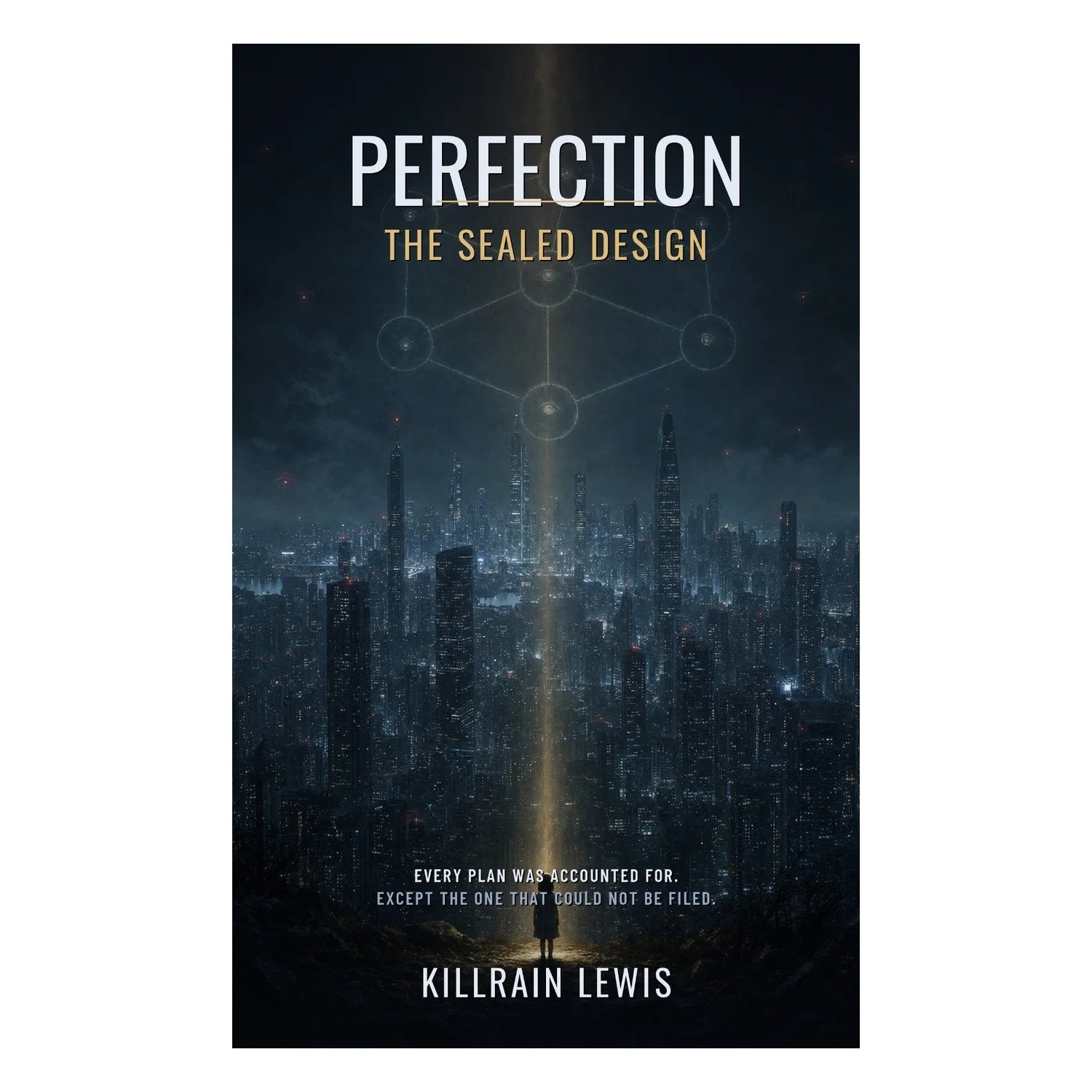
Opening in Shenzhen, in the surveillance city's own words, “the city never stopped watching” - the novel begins with a chilling portrait of total, patient, automated observation, then pulls back to reveal a seventeen-year operation, run through insulated funding nodes across four jurisdictions, that has spent a woman's entire life engineering her from childhood into an unwitting analyst, mother, and instrument of a design known internally as PROJECT: BLOODLINE. The novel centers this woman and her young son, whose own extraordinary analytical gift - cross-referencing, “light lines and heavy lines” - becomes both the design's proudest achievement and its greatest exposure risk.
The book is structured as a slow unmasking: an architecture of behavioral profiling and constructed convergence so total that its architects believed it had accounted for everything measurable about its subject - except the one thing no surveillance system can log: an interior life, love, grief, and a mother's bond with her children that “is not a relational variable.” Perfection is a technological-surveillance thriller with a domestic, deeply human center, following a family working, table by table and notebook page by notebook page, to expose a system built to be unfindable.
Where the screenplay renders this as visual and structural drama for the screen, the novel lingers inside the prose's own controlling metaphor - the record, the file, the archive - giving full weight to what a seventeen-year design could plan for and what it could never see coming.
Opening in Shenzhen, in the surveillance city's own words, “the city never stopped watching” - the novel begins with a chilling portrait of total, patient, automated observation, then pulls back to reveal a seventeen-year operation, run through insulated funding nodes across four jurisdictions, that has spent a woman's entire life engineering her from childhood into an unwitting analyst, mother, and instrument of a design known internally as PROJECT: BLOODLINE. The novel centers this woman and her young son, whose own extraordinary analytical gift - cross-referencing, “light lines and heavy lines” - becomes both the design's proudest achievement and its greatest exposure risk.
The book is structured as a slow unmasking: an architecture of behavioral profiling and constructed convergence so total that its architects believed it had accounted for everything measurable about its subject - except the one thing no surveillance system can log: an interior life, love, grief, and a mother's bond with her children that “is not a relational variable.” Perfection is a technological-surveillance thriller with a domestic, deeply human center, following a family working, table by table and notebook page by notebook page, to expose a system built to be unfindable.
Where the screenplay renders this as visual and structural drama for the screen, the novel lingers inside the prose's own controlling metaphor - the record, the file, the archive - giving full weight to what a seventeen-year design could plan for and what it could never see coming.